
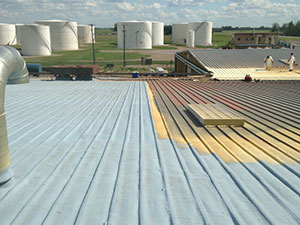
At Brenneman Roofing, we help business owners in Republic, MO protect their properties with professional spray foam roofing solutions. Spray foam roofing is a high-performance option that forms a seamless, durable, and energy-efficient roof system. Unlike traditional roofing materials, spray foam expands on-site to create a continuous layer that adheres directly to the roof deck. This tight seal minimizes leaks, improves insulation, and enhances the roof’s long-term performance. A professionally installed spray foam roof can provide reliable protection for decades. For expert installation or evaluation, contact Brenneman Roofing at (877) 370-6125, serving commercial properties throughout Republic, MO.
Why Spray Foam Roofing Outperforms Traditional Systems
Spray foam roofing offers unique advantages that make it ideal for commercial buildings:
Seamless, monolithic coverage: The foam expands to cover the entire roof surface without seams or joints, eliminating the weak points where leaks often occur.
Superior water resistance: The continuous layer acts as a barrier against rain, snow, and ponding water, helping to prevent moisture damage to insulation and decking.
High durability: Spray foam roofs can withstand temperature fluctuations, UV exposure, and foot traffic without cracking or splitting.
Missouri’s climate enforces how essential it is to have a resilient roof. Spray foam’s adaptability and adhesion ensure the roof remains intact under these conditions.
How Spray Foam Roofing Enhances
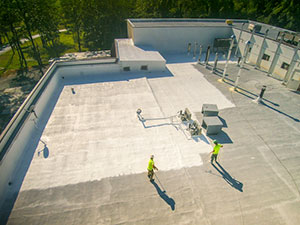
Beyond leak prevention, spray foam roofing provides multiple functional benefits for commercial buildings:
Energy efficiency: Spray foam has high R-value per inch, which improves insulation and reduces HVAC demand. This helps lower energy costs and maintain consistent indoor temperatures.
Structural support: The foam adheres to the roof deck, providing additional rigidity and contributing to the overall strength of the roofing system.
Thermal protection: It reflects heat in summer and retains warmth in winter, reducing thermal expansion and contraction that can damage other roofing materials.
Air sealing: Spray foam fills cracks and gaps, preventing drafts and improving overall building envelope performance.
These characteristics make spray foam roofing suitable for warehouses, offices, retail centers, and other commercial buildings that require durable, energy-efficient protection.
Types of Spray Foam Systems
Spray foam roofing is typically made of polyurethane foam, applied as a liquid that expands and cures into a solid layer. Key properties include:
Closed-cell foam: Dense and rigid, providing excellent structural support, high R-value (typically 6–7 per inch), and moisture resistance.
Open-cell foam: Less dense and more flexible, generally used for specific insulation needs but not as common in commercial roof applications.
The thickness of the applied foam layer can vary depending on building requirements but usually ranges from 1.5 to 3 inches. A thicker layer increases insulation and structural support but may require additional coating to protect against UV exposure.
Installation and Quality Considerations
A successful spray foam roofing system requires proper preparation and professional installation:
Roof assessment and cleaning: The roof deck is inspected and cleaned to ensure proper adhesion. Debris, loose materials, or contaminants can compromise performance.
Primer application (if needed): Some roof surfaces require a primer to improve foam adhesion.
Foam application: Spray polyurethane foam is applied uniformly, expanding to fill gaps, irregular surfaces, and seams.
Coating application: After curing, a protective coating is sprayed or rolled onto the surface for UV protection and waterproofing.
Post-installation inspections verify that the foam and coating are consistent, seams are fully sealed, and water flows properly toward drains or scuppers.
Real Benefits
Spray foam roofing provides measurable advantages for building owners:
Leak prevention: Seamless coverage reduces leaks and interior water damage.
Energy savings: Reduced heating and cooling costs due to high R-value and reflective coatings.
Durability: Resistant to Missouri’s weather extremes, including hail, snow, and strong sunlight.
Low maintenance: Unlike traditional membranes, spray foam does not require frequent seam repairs or patching.
Businesses with rooftop HVAC units, solar panels, or heavy foot traffic also benefit from foam’s flexibility and ability to protect underlying materials.
Spray Foam Roofing Professionals
Professional installation is critical for spray foam roofing. Correct application ensures adhesion, uniform coverage, and long-term performance. Brenneman Roofing evaluates roof conditions, prepares surfaces, applies foam and coatings, and inspects the finished roof for consistent quality. Working with a local expert ensures that Republic, MO buildings are protected from both environmental stress and operational wear.
At Brenneman Roofing, we specialize in spray foam roofing systems that combine durability, energy efficiency, and long-term performance. To explore how your building can benefit, contact us at (877) 370-6125, serving commercial properties throughout Republic, MO.
FAQ
How thick should spray foam roofing be?
Commercial applications typically use 1.5–3 inches, depending on the insulation required and structural needs.
Can spray foam roofing save energy?
Yes, high R-value and reflective coatings reduce heating and cooling costs.
Is spray foam roofing durable in Missouri’s climate?
Yes, it resists temperature swings, UV exposure, snow, and rain.