
Selecting the right roofing system is a critical decision for commercial property owners. In Bolivar, MO, businesses must consider weather exposure, energy performance, maintenance requirements, and long-term value. When comparing commercial spray foam roofing to traditional flat roof systems such as TPO, EPDM, and modified bitumen, understanding the differences can help owners make informed investments. Brenneman Roofing provides professional commercial spray foam roofing services in Bolivar, MO, helping businesses choose durable and energy efficient solutions tailored to their buildings. Contact us on (877) 370-6125 to discuss the rest of the details.
Spray Foam Roofing: Cost-Effective Investment
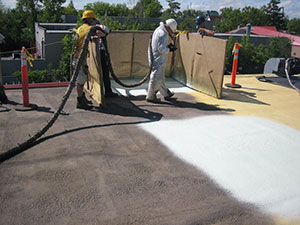
Commercial spray foam roofing, also known as spray polyurethane foam or SPF roofing, is a seamless system applied as a liquid that expands into a solid foam. The material adheres directly to the existing roof surface, forming a continuous layer of insulation and waterproof protection. A protective coating is then applied to shield the foam from ultraviolet exposure and weather damage.
Unlike traditional flat roof systems that use sheets or rolls of membrane material, commercial spray foam roofing creates a fully adhered, seamless surface without joints or mechanical fasteners.
Traditional Flat Roof Systems
Traditional flat roof systems include single ply membranes like TPO and EPDM, as well as multi-layer systems such as modified bitumen. These materials are installed in sheets that are either mechanically fastened, fully adhered, or heat welded together.
While these systems have proven performance records, they contain seams that can become vulnerable over time. Temperature fluctuations in Bolivar, MO can cause expansion and contraction, placing stress on seams and flashing. Over time, this movement can lead to separation and potential leaks.
What Makes Spray Foam Roofing So Durable?
Spray foam roofing is created by applying liquid polyurethane foam directly onto the existing roof substrate. The foam expands and cures into a solid, seamless layer that conforms to the roof surface. Once cured, it is coated with a protective elastomeric layer, often silicone or acrylic, to shield against ultraviolet exposure and weather.
Several characteristics contribute to the long term durability of spray foam roofing:
- Seamless Application: Unlike many commercial roofing systems that rely on seams, fasteners, or adhesive joints, SPF roofing forms a continuous membrane. Seams are often the weakest point in traditional roofing systems and a common source of leaks. Eliminating them significantly reduces failure risk.
- Closed Cell Structure: Spray foam roofing uses closed cell foam. If the surface is ever damaged, water remains localized rather than spreading throughout the system. This containment helps prevent widespread deterioration.
- Adhesion Strength: SPF adheres directly to the roof deck, minimizing the chance of uplift from high winds. Its strong bond enhances structural integrity and long-term performance.
- Flexibility and Expansion: Commercial buildings expand and contract with temperature changes. Spray foam roofing remains flexible, allowing it to move with the structure without cracking or separating.
Installation and Disruption
Commercial spray foam roofing can often be installed directly over an existing roof if the substrate is in good condition. This reduces the need for tear off and minimizes disruption to daily operations. Because the foam conforms to the roof surface, it can also improve drainage by filling low areas where water collects.
Traditional flat roof replacement often requires removal of the existing system before installation. Tear off increases labor time and can temporarily expose the building to weather during construction.
Brenneman Roofing evaluates each commercial property in Bolivar, MO to determine whether spray foam roofing can be applied over the current system, helping business owners reduce downtime.
Maintenance and Longevity
Both commercial spray foam roofing and traditional flat roof systems require regular inspections. However, spray foam roofing offers a unique benefit through recoating. After years of service, the protective coating can be renewed, extending the life of the roof without full replacement.
Traditional membranes reach a point where full replacement becomes necessary once seams and materials deteriorate beyond repair. With proper maintenance and periodic recoating, commercial spray foam roofing can provide long term protection for decades.
Leak Resistance and Seam Performance
Seams are one of the most common sources of leaks in traditional flat roof systems. As seams age, they can weaken due to weather exposure and structural movement.
Commercial spray foam roofing eliminates seams entirely. The seamless application creates a continuous waterproof surface that seals around penetrations, curbs, and rooftop equipment. This reduces the risk of water intrusion and simplifies long term maintenance.
Spray Foam Roofing Specialists
Every commercial building has unique structural requirements and budget considerations. Traditional flat roof systems remain reliable options in certain applications. However, commercial spray foam roofing offers seamless protection, enhanced energy efficiency, and renewable longevity. Brenneman Roofing provides expert consultation and installation services in Bolivar, MO. By assessing building conditions, energy goals, and long-term performance expectations, their team helps commercial property owners choose the roofing system that delivers the greatest value and durability. Call us at (877) 370-6125!
FAQ
Is commercial spray foam roofing suitable for large industrial buildings?
Yes. Spray foam roofing is commonly used on warehouses, manufacturing facilities, and other large commercial structures.
Can spray foam roofing improve drainage on flat roofs?
Yes. The foam can be applied to build up low areas and promote positive water flow toward drains.
How soon can a commercial spray foam roof be used after installation?
Spray foam roofing cures quickly, allowing buildings to return to normal operations shortly after application.